
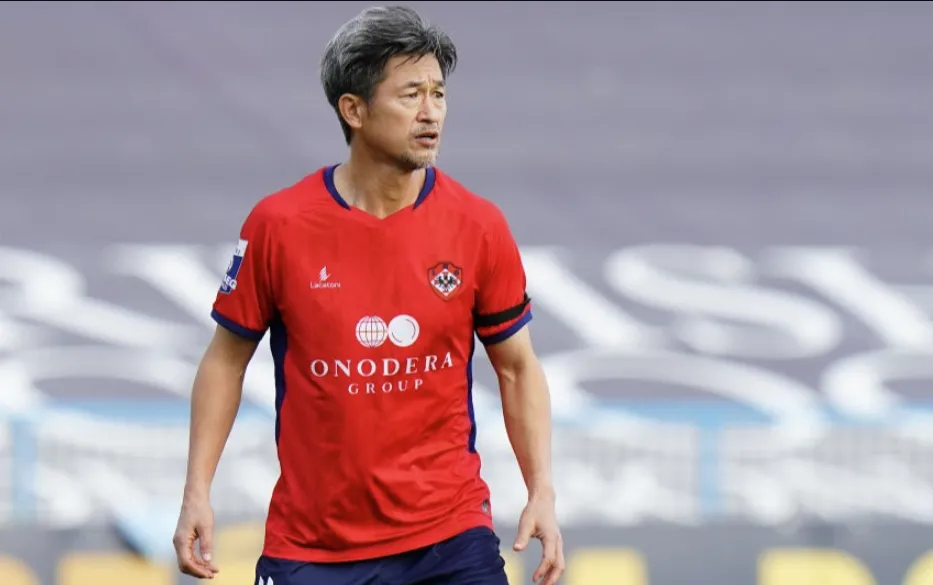
In a world where professional footballers typically hang up their boots in their mid-thirties, one man continues to rewrite the rulebook. Japanese legend Kazuyoshi Miura, affectionately known as “King Kazu,” has once again stunned the sporting world by extending his professional career at the remarkable age of 58. While most athletes his age are enjoying retirement and sharing stories of glory days past, Miura is still lacing up his boots, stepping onto the pitch, and competing at a professional level. His journey isn’t just about football—it’s about passion, purpose, and proving that age is merely a number when your heart beats for the beautiful game.
Miura’s story transcends typical sports narratives. It’s a testament to human willpower and an unwavering love for football that has kept him going longer than any other professional player in history. As the world watches in awe, this incredible athlete continues to inspire millions across generations, showing us all what’s possible when you refuse to accept conventional limits. Let’s dive deep into the extraordinary journey of Kazuyoshi Miura and understand what makes him tick at an age when most have long since retired.
Who Is Kazuyoshi Miura? The Man Behind the Legend
Early Beginnings and Rise to Stardom
Kazuyoshi Miura‘s love affair with football began in his youth in Shizuoka, Japan. Born on February 26, 1967, Miura showed exceptional talent from an early age, but his path to greatness wasn’t straightforward. Unlike many modern players who rise through academy systems, Miura took an unconventional route that would ultimately shape his extraordinary career.
At just 15 years old, Miura made a bold decision that would change his life forever. He moved to Brazil alone, without speaking a word of Portuguese, to pursue his football dreams. This wasn’t just brave—it was revolutionary for a Japanese teenager in the 1980s. He joined the youth setup at Clube Atlético Juventus in São Paulo, where he faced immense challenges including cultural barriers, homesickness, and fierce competition.
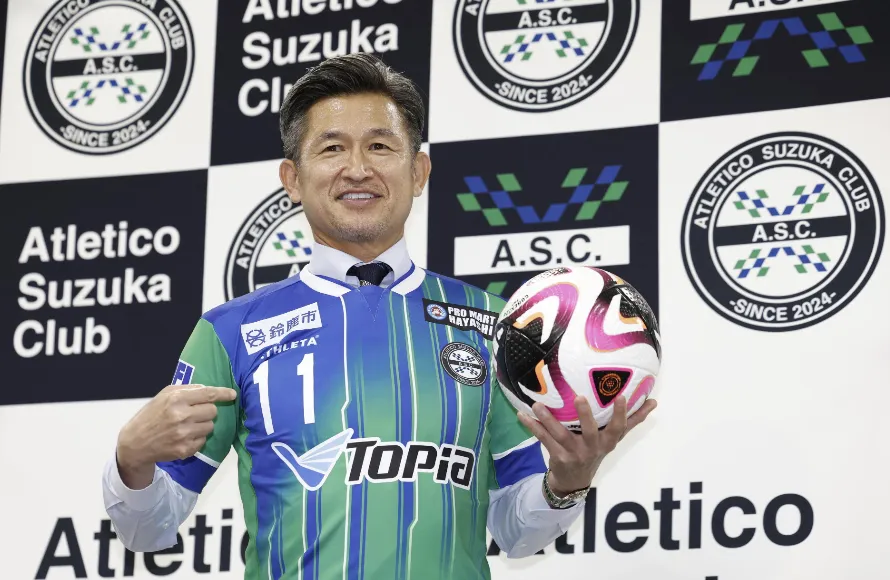
“It was the hardest period of my life,” Miura once shared with Japanese media. “But I knew that if I wanted to be a professional footballer, I had to prove myself in Brazil, the home of samba football.”
His time in Brazil forged his technical skills and mental toughness. Miura learned the “jogo bonito” (beautiful game) style, developing the flair, creativity, and resilience that would later define his career. After five years in Brazil, he signed his first professional contract with Santos FC in 1986, following in the footsteps of his idol Pelé. Though his time at Santos was brief, it laid the foundation for an incredible journey.
International Stardom and the J.League Era
Miura returned to Japan in 1990 and quickly became the face of Japanese football. When the J.League was founded in 1993, Miura was already established as Japan’s biggest football star. His dynamic playing style, goal-scoring ability, and charismatic personality made him a household name across the nation.
During his prime with Verdy Kawasaki (now Tokyo Verdy), Miura won multiple J.League titles and was named the J.League Player of the Year in 1993 and 1994. He also earned the AFC Asian Cup MVP award in 1992 after leading Japan to their first Asian Cup triumph. His contributions to Japanese football were immeasurable—he inspired an entire generation to take up the sport and helped elevate the J.League’s profile internationally.
On the international stage, Miura earned 89 caps for Japan and scored 55 goals, making him the national team’s all-time leading scorer for many years. He represented Japan at the 1998 FIFA World Cup in France, fulfilling a lifelong dream. Though Japan didn’t advance past the group stage, Miura’s presence on the world’s biggest stage was a milestone moment for Asian football.
The Secret to Miura’s Longevity: How He Keeps Playing at 58
Unwavering Dedication to Training
What makes Kazuyoshi Miura different from every other footballer in history? The answer lies in his extraordinary approach to fitness, nutrition, and mental preparation. Miura’s training regimen would exhaust athletes half his age. He wakes up at 6 AM daily, begins with stretching routines, and follows a meticulously planned training schedule that includes strength work, cardiovascular exercises, and ball drills.
“Most players my age would struggle to complete even 20% of Miura’s training volume,” says Dr. Hiroshi Tanaka, a sports scientist who has studied Miura’s methods. “What sets him apart is not just physical ability but an incredible mental discipline that borders on obsession. He treats every training session as if he’s preparing for a World Cup final.”
Miura’s diet is equally disciplined. He follows a strict nutritional plan focused on lean proteins, complex carbohydrates, and plenty of vegetables. He avoids alcohol and processed foods completely, maintaining a body fat percentage that would impress athletes decades younger. His commitment to recovery includes regular massage therapy, ice baths, and adequate sleep—all non-negotiable parts of his routine.
Playing Style Adaptation Over the Years
As Miura has aged, he’s adapted his playing style to compensate for the natural decline in speed and explosive power that comes with aging. In his youth, Miura was known as a dynamic striker who could beat defenders with pace and dribbling. Today, he’s transformed into a more positionally intelligent forward who relies on experience, anticipation, and clever movement off the ball.
“I’ve had to reinvent myself multiple times,” Miura explained in a recent interview. “When you can’t run as fast as you used to, you learn to think faster. You anticipate where the ball will be, not where it is. Football is played with the mind as much as the body.”
Career Timeline: Key Milestones in Miura’s Extraordinary Journey
The Formative Years (1982-1993)
Miura‘s early career was marked by bravery and determination. At 15, he moved to Brazil alone, learning Portuguese and adapting to a completely different culture. By 1986, he’d earned a professional contract with Santos, becoming one of the first Japanese players to make an impact in South American football. After brief stints with various Brazilian clubs, he returned to Japan as a footballing prodigy with exceptional technical skills.
The Golden Era (1993-2000)
These were Miura‘s peak years. He dominated the J.League with Verdy Kawasaki, won multiple titles, and became the face of Japanese football internationally. His performances at the 1998 World Cup and various Asian competitions cemented his legendary status. During this period, Miura was arguably the most famous athlete in Japan, with endorsement deals, television appearances, and a fan base that stretched across Asia.
The Globetrotting Phase (2001-2017)
Miura‘s persistent love for the game led him to play in various leagues around the world. He had stints with clubs in Italy (Genoa), Croatia (Dinamo Zagreb), Australia (Sydney FC), and Greece (Atromitos). While these moves didn’t always yield overwhelming success on the score sheet, they demonstrated his remarkable adaptability and desire to challenge himself in different footballing environments.
The Ageless Wonder (2018-Present)
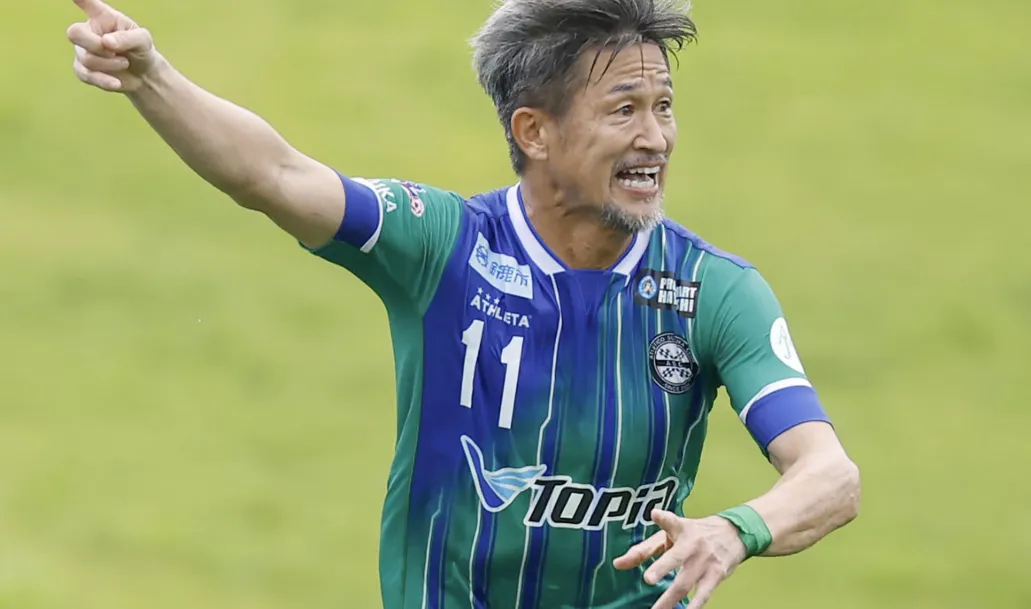
Since 2018, Miura has been playing for Portuguese side Oliveirense, where continues to compete at a professional level. His presence has boosted the club’s profile and attracted international attention. In 2023, he made history by becoming the oldest professional footballer to score in a competitive match, a record he continues to extend with every appearance.
“Playing with Kazuyoshi is like having a living encyclopedia of football in your team,” his Oliveirense teammate said. “He shares advice, demonstrates techniques, and sets an example of professionalism that we all try to follow. His age doesn’t matter—on the pitch, his quality shows.”
What This Means for Football and Aging Athletes
Breaking Down Age Barriers in Sport
Miura‘s continued professional career challenges deeply held beliefs about aging in sport. For decades, conventional wisdom held that professional footballers couldn’t maintain elite performance past their mid-thirties. Miura hasn’t just extended this timeline by a few years—he’s more than doubled it, competing at 58 when most players retire in their early thirties.
“Kazuyoshi Miura has single-handedly rewritten our understanding of athletic longevity,” says Professor James Miller, a sports science expert. “His career demonstrates that with proper conditioning, nutrition, and mental approach, the human body can continue performing at high levels far longer than we previously thought possible. This has implications not just for football but for all sports.”
Sports medicine professionals have studied Miura’s approach to rehabilitation and injury prevention, noting that his meticulous attention to recovery and his willingness to adapt his playing style have been crucial factors in his longevity. His body has avoided the major injuries that typically end careers, partly due to his disciplined approach and partly due to genetics.
Inspiring a New Generation
Miura‘s impact extends far beyond his own career. His example has inspired older athletes worldwide to continue pursuing their passions, whether in sport or other fields. Young players look up to his professionalism and dedication, learning that success requires consistent effort over decades, not just talent alone.
At his current club, Oliveirense, Miura has become something of a father figure to younger players. “He shows us what commitment really means,” said one of the club’s youth prospects. “When you see someone at 58 working harder than everyone else in training, it makes you realize you have no excuses. He’s not just a player—he’s a lesson in what’s possible.”
Impact on Modern Football and Future Possibilities
Changing Perspectives on Age in Professional Football
Miura‘s legacy has already begun influencing how clubs view older players. While ageism still exists in football, particularly at the highest levels, Miura has shown that older players can provide unique value through experience, leadership, and professionalism. Several clubs have begun developing specialized programs for veteran players, recognizing their contributions beyond raw physical performance.
The rise of sports science and data analytics has also helped clubs better understand how to manage aging athletes. Clubs now monitor player workloads more carefully, use advanced recovery techniques, and develop individualized training programs that extend careers. Miura’s example has accelerated these trends, particularly in Asian football.
What the Future Holds for King Kazu
So how long can Kazuyoshi Miura continue playing? The man himself remains characteristically non-committal about retirement plans. When asked about his future, he often responds with a smile: “I’ll keep playing as long as I can contribute to my team and enjoy the game. Football is my life, and I can’t imagine living without it.”
Medical experts suggest that Miura could potentially play for several more years if he maintains his current fitness levels and avoids serious injuries. His recent performances, including scoring goals in competitive matches, suggest that his footballing quality remains intact, even if his physical attributes have diminished.
“I wouldn’t be surprised to see him playing at 60,” said his long-time physiotherapist. “His body has responded remarkably well to the demands of professional football. With proper care and management, he could extend his career even further.”
Conclusion: The Eternal Legend of Kazuyoshi Miura
As we reflect on Kazuyoshi Miura’s incredible journey, one thing becomes clear: he is more than just a football player. He’s a symbol of what’s possible when human determination meets unwavering passion. At 58 years old, Miura continues to compete at a professional level, defying expectations and inspiring millions across the globe. His story reminds us that age is not a barrier to pursuing our dreams—it’s merely a number that we can choose to ignore.
For fans of Crickex, Miura’s journey offers valuable lessons about persistence, adaptability, and the joy of doing what you love. Whether you’re a young athlete dreaming of professional glory or someone simply looking for motivation in your daily life, Miura’s example shows that with discipline and dedication, remarkable achievements are possible.
We’d love to hear your thoughts! Have you been following Kazuyoshi Miura’s extraordinary career? What’s the most inspiring aspect of his story for you? Share your comments below, and don’t forget to share this article with fellow football enthusiasts. For more incredible sports stories and in-depth analyses, make sure to explore other content on Crickex—your ultimate destination for sports coverage that goes beyond the scores.
